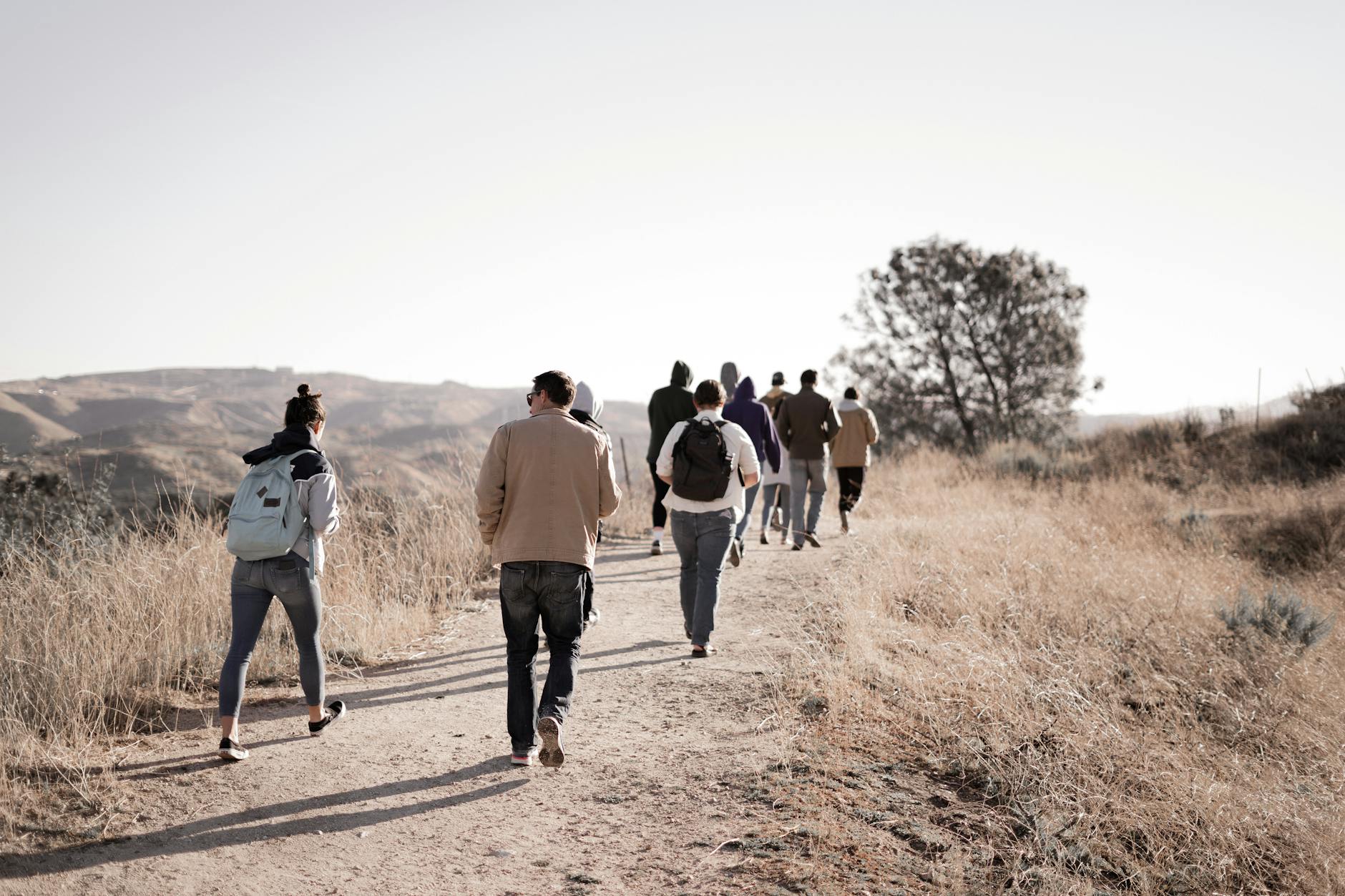
‘Leading So People Will Follow’

Photo by scott neil on Pexels.com

‘Why do people want passion in a leader?’

Erika Andersen

‘A truly passionate leader invites and encourages dialogue. She wants others to share in her passion, not simply tolerate or be railroaded by it.’

‘Leaders who are farsighted are realistic … and future oriented.’

‘Speaking from a we versus I perspective arises out of a belief that we are responsible for success, that we will work together to achieve the goals of the organization.’

Learning begins inside your own head, in managing how you’re talking to yourself about the obstacles before you.’

‘If we align ourselves behind a leader, we want that person to stay the course: we don’t want him or her to get bored, or distracted, or careless, and wander away from the fray.’

‘… Courageous leader also has the courage to change her mind in response to new information and take full responsibility for both the initial position and the new one.’

Courage in a leader is a blend of toughness, decisiveness, willingness to move past one’s own limitations, humility, and resilience. It involves making difficult business and personal decisions, overcoming fear and risk to act on those decisions, and responding to the outcomes of those decisions in a responsible way.’

People want courageous leaders in order to know that someone will make the tough calls and take responsibility for them.’-

Erika Andersen

Recruitthebest.org

‘When people observe their leader behaving courageously over time, they are much more willing to follow him or her into new territory.’

When the leader lacks courage, people feel as though they need to protect themselves. They tend to withdraw their commitment from the team and the enterprise and the enterprise try to figure out how to mitigate the personal impact of their leader’s lack of courage.’

Source:

Erika Andersen (2012). Leading So People Will Follow

The Power Of Suffering

Photo by Ivan S on Pexels.com

According to Anthony Robbins, ‘Is there an area of your life in which you feel unnecessary pain?

Are you perhaps reacting rather than deliberately choosing?

How could you change your focus and turn a seemingly painful event into a pleasurable opportunity to learn, to grow, or help others?

What are some of your pain-avoiding and pleasure-inducing patterns?

What are some of the more positive ways in which you could move away from pain and toward pleasure?’

Whether you want to face the above questions or not, you cannot live your life without pain. It is part of who we are. No one can achieve greatness without first going through pain.

If you want to change your life, you must be comfortable with discomfort. If you want to grow, you must ‘get comfortable with uncertainty’. Without it, you are playing! You are not going anywhere.

If you do not want to get comfortable with stress, then you are not going to be able to reach your greater heights.

If you want to be successful, you must face your pain. Pain is the way to your next level. It is pain before success. It is pain before growth. It is pain before self-discovery.

In her book Why You Should Empower Yourself: How to Make Lemonade when Life Gives You Lemons, Xenia Tchoumi writes, ‘Pain is a powerful transformative force for growth. You can’t become a better person or achieve your goals without going through a certain amount of discomfort and difficulty. No one has ever made it in life without encouraging some hurdles and failures.’ The author is right.

If you want to improve your life, you must embrace uncertainty. Do not ignore it. Do not run away from difficult things. The more you do, the better for you.

When you are faced with something that you have not done before, give it a shot. When you accept the pain as part of your own growth package, you will be able to cope with it. Don’t throw away an opportunity to grow.

If you want to grow your life, to expand your world, you must embrace discomfort. The question is, ‘Do you really know how to suffer?’

As always, you are more, not less!