

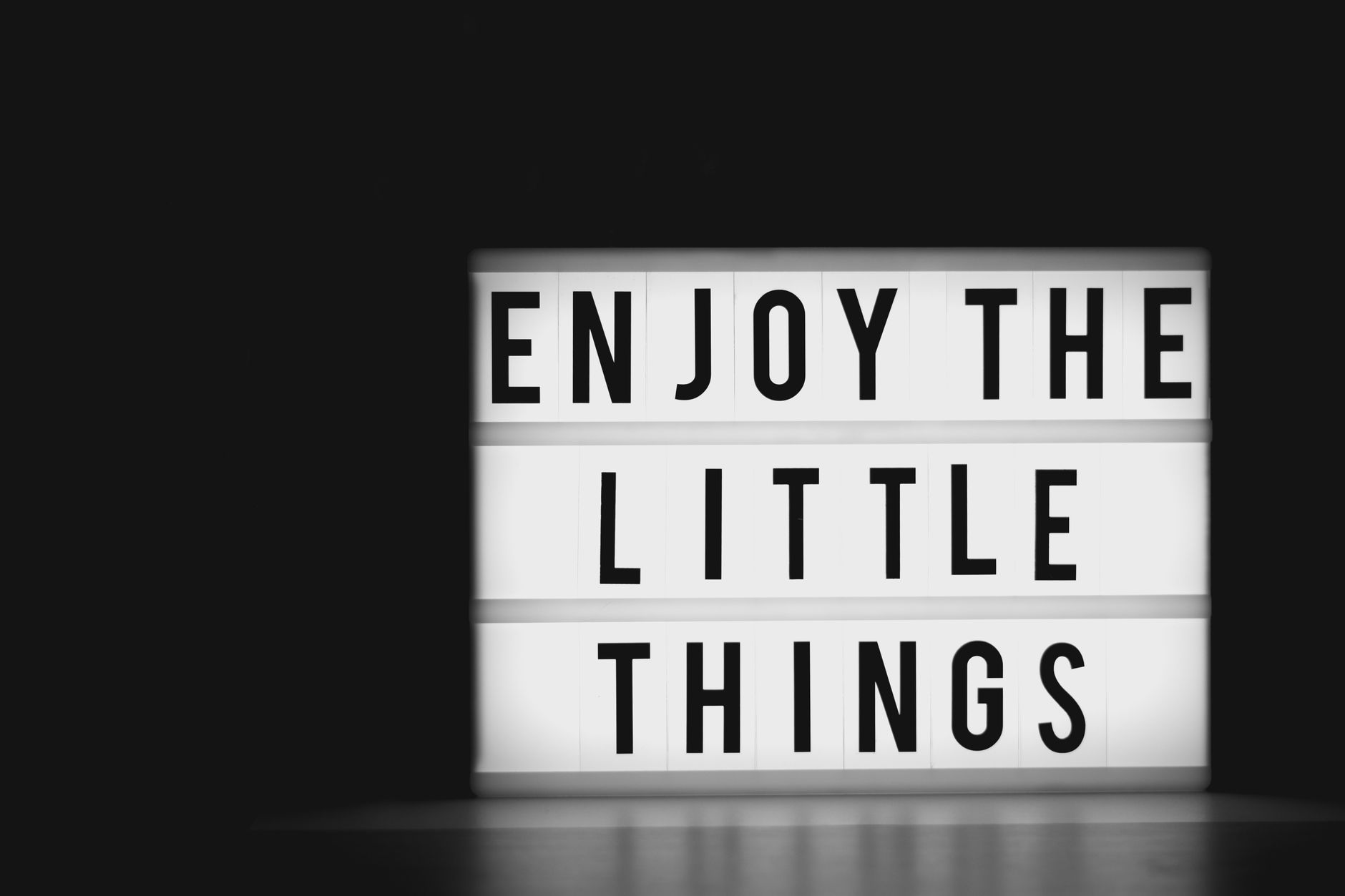
Yes, ‘enjoy the little things.’ Do the little things really well. When you do, the big things will be okay.
It takes courage to do that. It takes discipline to do that. But if you want to get to where you want to be, you must ‘enjoy the little things.
According to William C. Taylor, ‘The future is not shaped by people who don’t really believe in the future. ‘It is shaped by men and women who want something very much or believe very much.’
More is possible when you believe in more, when you believe in yourself, and when you think you can do more than you are doing right now.
‘Don’t let what you know limit what you can imagine.’ If you can imgine, you can create. But to do that, you have to have the courage to live boldly, the courage to believe in your future, that where you are going is going to be better than where you are now.
‘People with the most experience are often the last ones to see and seize opportunities for something dramatically new.’ Innovation is scary. Change is scary. Great people do innovative things, They think differently. They act differently. And they work differently. If you want to stay relevant, you must do relevant things.
‘The most creative leaders rarely use the word innovation to explain their ambitions or inspire their colleagues.’ Why is that? Because they have already created an innovative culture.
‘The most creative leaders are smart yet naive, playful but disciplined, humble, and proud.’ Creative leaders are smart because they never stop learning. To them, everything is new. They are hungry. They know that nothing stays the same forever. That is why they never stop learning new things.
‘You’re only as young as the new things you do, the number of ‘firsts’ in your days and weeks.’ New things keep us alive. Old things keep us old, even older. If you want to experience new things in your life, then go for new things. Don’t be scared. Face it. Because life is about facing the unknown. If you want to know more, you must first face the unknown.
‘It’s just as important to be kind as to be clever.’ People follow kind, not clever. If you are not kind to people, they won’t pay attention to you. Remember that people don’t care about what you know, but they care about who you are as a human being. If you want to lead, be a kind human being.
‘Do small things with great love.’ That is where greatness comes from. Whatever it is that you are doing, don’t ignore the little things. They are powerful. They can save you. When you do them well, you don’t have to worry about the big things.
‘Nobody wins unless everybody wins.’ You are where you are for a reason. Explore where you are. Work with people. Don’t try to do things alone. Because no one succeeds alone, no matter how smart you think you are.
‘Can you limit your ego to expand your creative horizon?’ Your ego is not bad if you use it well. You can use your ego to defeat your enemies. You can also use your ego to limit yourself. Your ego wants you to be the boss, your own boss. Your ego doesn’t want to be questioned.
To your ego, no one is better than you! When you start to think like that, you start to decline. You only pay attention to yourself, not to others. Yes, it is good to listen to what is going on within you.
But if you want to do great things in your life, you need to limit your ego to expand your life.
Source
William C. Taylor (2016). Simply Brilliant: How Great Organizations Do Ordinary Things In Extraordinary Ways!



You must be logged in to post a comment.